Starting the Report Isn't the Problem. Finishing It Is.
A pathologist sits down to start a case. The diagnosis isn’t the hard part. The workflow is... and it's potentially wasting hours of their day. In most labs, inefficiency doesn’t come from how reports are started. It comes from everything that happens after.
A pathologist can dictate findings quickly, perhaps even efficiently. But then the real work begins, as they start clicking through fields, navigating between systems, re-entering structured data, double-checking required elements, fixing inconsistencies, and making sure everything is complete before sign-out.
None of these steps may feel like the “problem” when viewed on their own. But together, they create small moments of friction that slow down the process.
The Hidden Bottleneck No One Measures
For years, pathology labs have tried to improve efficiency by focusing on input methods like transcription, dictation, and speech recognition. Yes, those improvements matter. But they only address the first step of the reporting workflow.
What happens next, after the initial input, is where time is actually lost. It doesn't happen with one big, obvious delay, but in dozens of small, repeated interruptions:
-
Switching between systems to find or enter information
-
Manually completing structured reporting elements
-
Stopping to validate required fields
-
Going back to fix errors before sign-out
Each one of these steps takes seconds. You might not even feel as though they're slowing you down much. But across a full day of cases, those seconds turn into hours.
This is the bottleneck most labs don’t measure, and the one that has the greatest impact on productivity.
Faster Input Doesn’t Fix a Slow Workflow
It’s a common assumption: “If we can just dictate faster, we’ll be more efficient.”
But faster input doesn’t fix a fragmented pathology reporting workflow. It just gets you to the next obstacle sooner. When reporting workflows are disconnected, manual, and interruption-heavy, speed at the front end only amplifies inefficiencies downstream.
That’s why many labs that move to speech still feel stuck. They’ve improved one step in the process, but left the rest untouched.
The Real Opportunity: End-to-End Workflow Improvement
Labs that see meaningful productivity gains aren’t just improving dictation. They’re rethinking how reports are created from start to finish. That means they're addressing all of these areas of friction:
➡️They’re reducing the number of steps required to complete a case.
➡️They’re minimizing system switching.
➡️They’re building workflows that guide pathologists forward, rather than forcing them to stop, check, and correct along the way.
Because when the workflow works, everything else improves:
-
Less rework
-
Fewer interruptions
-
More consistent reporting
-
Faster turnaround
And most importantly, pathologists can spend more time on diagnostic work instead of managing software.
Why This Matters Now
Making these workflow improvements isn't just about efficiency. It’s about sustainability. Pathology labs today are facing a variety of pressures, including persistent workforce shortages, increasing documentation and compliance requirements, and declining reimbursement alongside rising operational costs.
Simply hiring more staff won’t solve these challenges, and incremental fixes won’t keep up with the pressure. Labs need to get more out of the resources they already have, without increasing burnout.
That requires a different approach.
The Voicebrook Approach
At Voicebrook, we focus on the part of the workflow most vendors overlook: everything between the first word and final sign-out.
By connecting speech recognition, structured reporting, validation, and workflow automation into a single, streamlined experience, Voicebrook helps labs fundamentally change how reports are completed. The result isn’t just faster input... it’s a smoother, more efficient path from start to finish.
Labs using Voicebrook's pathology reporting solutions consistently report:
-
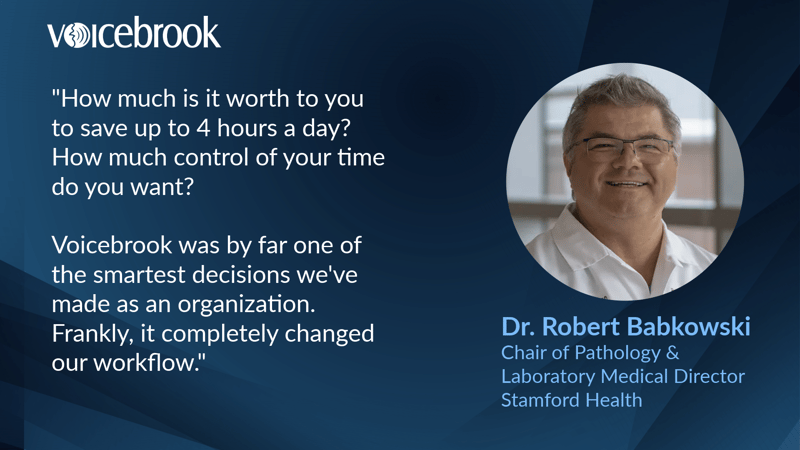
2–4 hours saved per pathologist per day
-
Increased case capacity without additional hires
-
Improved turnaround time
-
Reduced interruptions and rework
-
More consistent, standardized reporting
This is where real efficiency gains come from—not doing the same work faster, but removing the friction that slows it down in the first place.
A Simple Way to Evaluate Your Workflow
If you want to understand where your lab may be losing time, start by asking a few simple questions:
-
Where are pathologists spending time outside of diagnosis?
-
How many steps does it take to complete a report?
-
How often are reports revisited before sign-out?
-
How consistent is reporting across your team?
You may not be tracking these metrics formally, but if you ask your team, we bet they’ll know exactly where the friction lies. And once you fix those bottlenecks in the workflow, everything else—efficiency, turnaround time, capacity—starts to fall into place.