
The Pathologist Isn't the End of the Story. The Patient Is.
Voicebrook CEO and co-founder Ross Weinstein on his wife's breast cancer diagnosis, the pathology reports that guided her care, and how it reshaped Voicebrook's purpose: helping patients get results.
Voicebrook CEO and co-founder Ross Weinstein on his wife's breast cancer diagnosis, the pathology reports that guided her care, and how it reshaped Voicebrook's purpose: helping patients get results.
“When my wife was diagnosed with breast cancer, our world changed overnight. We had a young family at the time, so the worry didn’t stop with us. We went through the normal what-ifs any family in that situation does.
It started with a lump she found. Then a mammogram. Then waiting to get a biopsy scheduled. Then more waiting after the biopsy, by the phone, just worrying. When the call finally came, our hearts dropped. We didn’t know what to say to each other. For her, the worry was about our kids. For me, it was about her and our kids.
What followed was planning while paralyzed. We needed to find a doctor, and we had no idea where to start. The most highly recommended one told us the soonest appointment was three weeks out. I called directly and asked if there was anything they could do; they told me to check in daily. We lined up backups who could see her the following day. The next morning the top doctor’s office emailed. They could fit her in for Friday.

We met with two surgeons that day. The first one: forty minutes. A physical exam. The line I’ll never forget: ‘You are going to be with us for a long time.’ The second one: an hour and a half. She walked us through the report. What the receptors meant. What the staging implied. What the treatment options actually were, and how they connected to the findings.
We chose the surgeon who explained the report.
Even with the right surgeon, we needed to understand the reports ourselves. Six weeks of trying to make active decisions: surgery, and to what extent. Chemo, or not. What the percentages actually meant. Every one of these calls could mean the difference between life and death, or years of prolonged sickness, for the person I love most. And we were making them off of reports.
In her case, the difference in outcomes between chemo and no chemo was one to two percent, but had she been five years older, the difference would have been non-existent. We asked about alternatives. Her doctor agreed with our decision. The protocol has since been updated to match what we chose at the time, working from the reports.
Through all of it, I couldn’t help but worry that every day that passed could mean tumor growth or metastasis. One time the results came back on a Friday. We could see them, but we had to wait the entire weekend to get clarity on what they meant, then wait again to work out next steps with our doctor. More worry, more waiting. And it didn’t end with the diagnosis, or even the surgery. Some test results were still pending more than seventy days in.
And life didn’t pause. School, soccer, lacrosse, drama club, voice lessons, my wife volunteering, me coaching. We had to make it all work, and decide when to tell our kids, our friends, our family, all while waiting for answers.
What made informed advocacy possible was the reports. Without that level of detail, the doctor’s recommendation would have been the only voice in the room. With it, we could ask informed questions, weigh the percentages ourselves, and request alternatives. Every detail of every report helped guide us to the right decision.
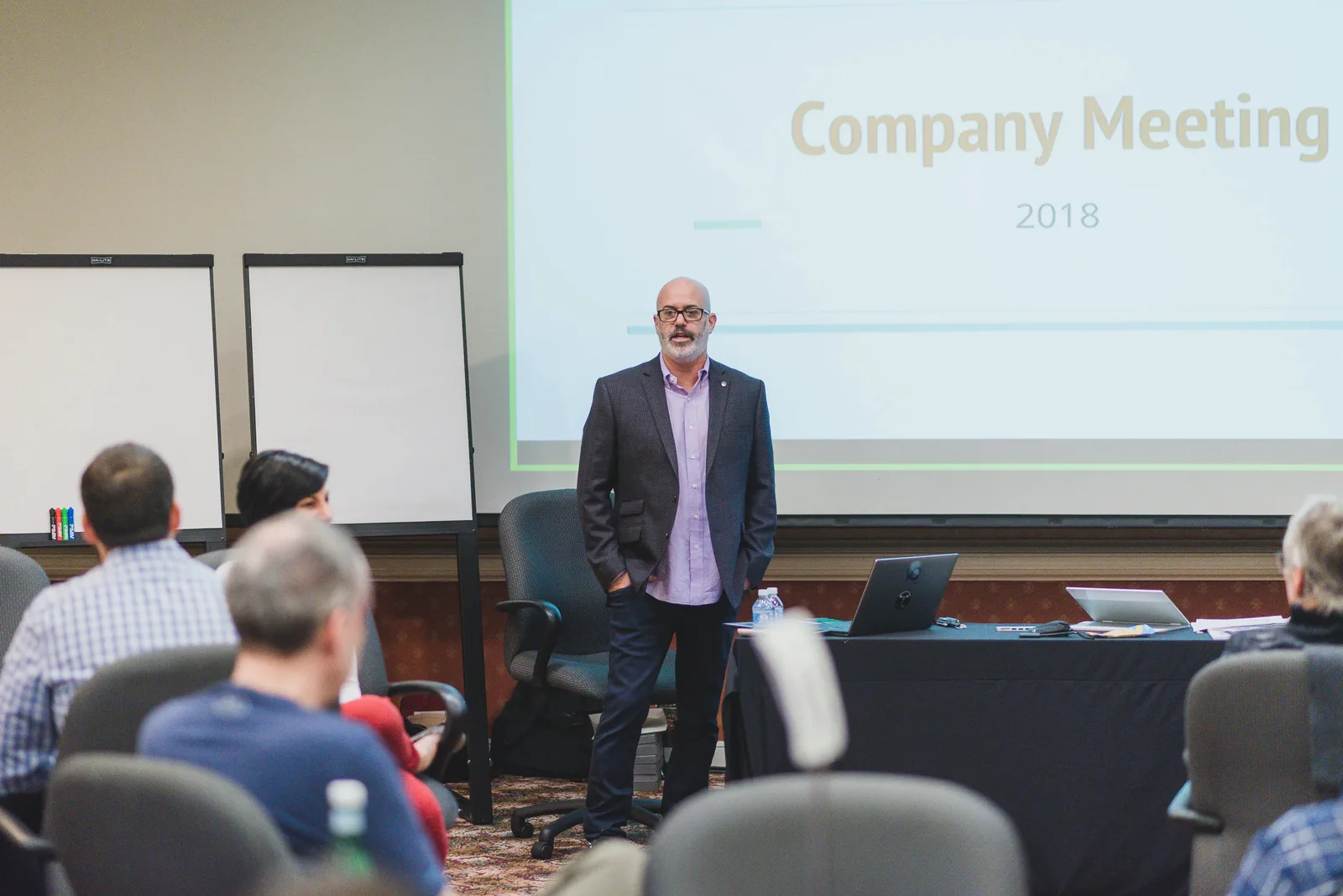
At some point (and the timing could not have been more inconvenient, since I was in the middle of preparing for our annual company meeting), I started looking at her reports differently. Not just as a patient’s spouse, but as someone who knew what went into them. I recognized the pathologists’ names. They were working at health systems where we had deployed our software: Northwell, Catholic Health Services of Long Island. Our work was right there in my family’s care. And the same thing is true, right now, for our employees’ families and friends across the country.
It was in that same stretch that I realized our core purpose had been too narrow and specific. At the time, it read: ‘To empower Pathologists to Save Time, Money, and Lives.’ Sitting with it then, in the middle of everything, I could feel how wrong that framing was: too much about the head, not enough about the heart.
The pathologist isn’t the end of the story. The patient is.
We needed to re-articulate around the person on the other end of the report: help patients get results. Both kinds of results: the timing of when the report arrives, and the accuracy of what’s in it. Quicker turnaround plus more accurate reports means better outcomes for the patient.
A couple of weeks after my wife had surgery, we had our annual company meeting. I shared the whole experience with the Voicebrook team: a deck walking through every report, every feeling, every next step, so they could connect to why this mattered. Tears were shed. Other employees shared their own stories about cases that had touched their own families. That meeting was the breakthrough where we finally understood our ‘why.’ Every improvement we make to the software, every day we shave off a report, is potentially an extra day of worry someone doesn’t have to live through.
I couldn’t be happier to tell you that my wife is well today. The experience changed both of us. She channeled it into coaching and mentoring other patients going through the process. She just completed her yoga instructor training and is now certified in women’s health and wellness, with the intention of nurturing the body, mind, and spirit of women facing their own diagnosis and recovery.
And since that experience, this work has never meant anything else, not for me, not for our team. Helping patients get results. That’s the work.”
More on Pathology News & Community
Browse the topic →Pathology News Roundup: August 2026
Voicebrook's Pathology News Roundup features industry headlines and insights that pathology professionals are talking about.
Pathology News Roundup: July 2026
Voicebrook's Pathology News Roundup features industry headlines and insights that pathology professionals are talking about.
Pathology News Roundup: June 2026
Voicebrook's Pathology News Roundup features industry headlines and insights that pathology professionals are talking about.