Top 5 Reasons Why Your Pathology Lab Needs Voicebrook
Pathology reporting is an intricate and time-sensitive process, requiring precision, efficiency, and flexibility. General-purpose speech recognition...
2 min read
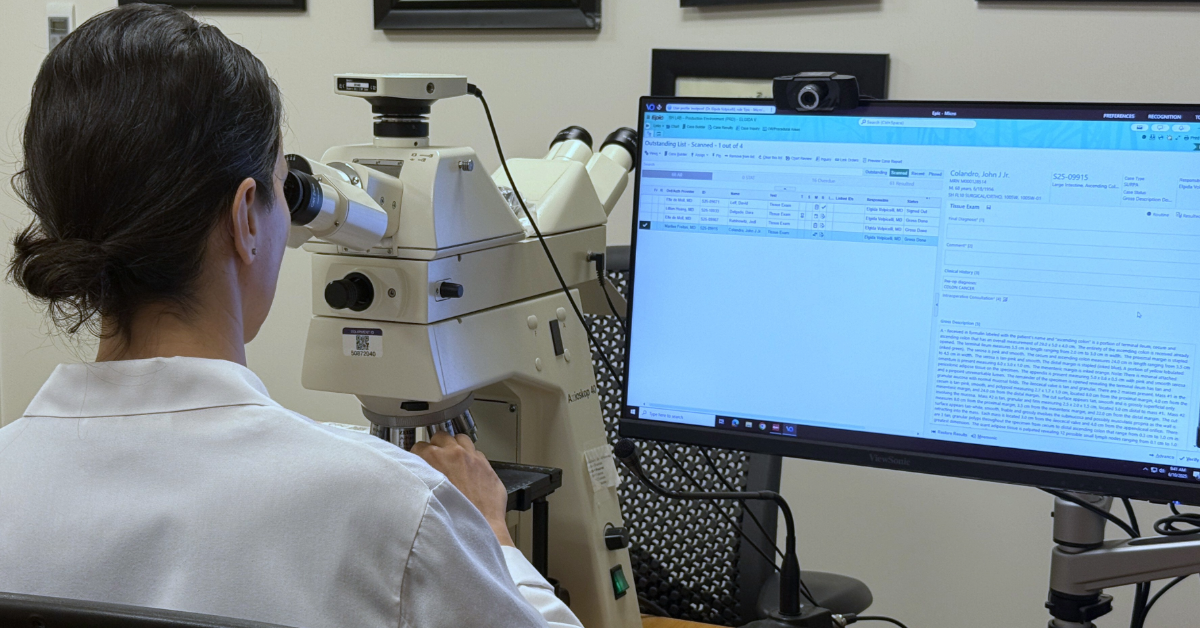
Many health systems today look standardized on the surface. Infrastructure is aligned. Transcription has been reduced or eliminated. Speech has been deployed.
On paper, the pathology reporting process appears modernized. But look a little deeper, and a different picture starts to emerge. Inside the lab, the day-to-day workflow often tells a different story. The workflow still feels fragmented, and even worse... it still slows pathologists down.

Enterprise pathology was supposed to get simpler. And the path to this simplicity seemed straightforward: Standardize the platform. Deploy speech. Reduce transcription. Create consistency.
But in many organizations, reporting workflows still vary across sites, across users, and even across cases. That variation comes at a cost. The friction and fragmentation is having a negative impact on the efficiency of the lab.
Pathologists are still navigating interruption-heavy workflows:
Each of these steps seems small on its own. But across an enterprise, they compound into something much bigger: a daily drain on time, focus, and capacity.
This isn’t just about the pathologists' experience. It’s about control and visibility across the enterprise.
What happens with inconsistency? Different sites develop different habits, different users work in different ways, and leadership often has limited visibility into where inefficiencies actually exist.
So even after major standardization efforts, enterprise scale can have an unintended effect:
it increases variation instead of reducing it. And when variation increases, so do delays, rework, and missed opportunities to improve performance.
If you want to truly standardize pathology at the enterprise level, you have to focus on the workflow itself—not just the tools around it. You might think the biggest inefficiencies are happening at the start of the report, but that's actually not the case.
The biggest inefficiencies are happening in the steps no one questions:
The navigation.
The structure.
The validation.
The rework.
That’s the space where most labs lose time. The good news is that it's also the space where you have the greatest opportunity for improvement.
When pathology workflows are truly streamlined across the enterprise, the impact is immediate:
Pathologists move through reports more smoothly
Operational consistency improves across sites and users
Leadership gains visibility into performance and variation
Capacity increases—without adding headcount
In other words, the system finally works the way it was supposed to.
Standardization across the enterprise isn’t complete until workflow is optimized, and Voicebrook helps labs address the part of the process most solutions overlook: the space between dictation and sign-out. By focusing on the entire workflow (not just the method of input) health systems can finally reduce variation, regain control, and unlock the capacity they expected all along.

Pathology reporting is an intricate and time-sensitive process, requiring precision, efficiency, and flexibility. General-purpose speech recognition...

“Voicebrook? That’s just a speech recognition solution, right?” It’s understandable why some might have that misconception. Voicebrook has been...
Pathology laboratories within the VA healthcare system face unique challenges: complex workflows, outdated EHR technology, and the need for precise...