3 min read
CAP Updates Breast Cancer Reporting Protocols. The College of American Pathologists (CAP) released its Q2 2026 Cancer Protocol updates, bringing significant revisions to breast cancer reporting in line with the WHO 6th Edition classification recommendations. The release includes updates to eight cancer protocols in total, with the most extensive changes applied to protocols for breast ductal carcinoma in situ (DCIS) and invasive breast cancer, covering both biopsy and resection specimens. The revisions enhance how pathologists characterize and report tumor type, grading, extent, and additional lesions, helping to ensure that pathology reports align with current international standards.
Beyond breast cancer, the Q2 release also includes refinements to kidney cancer protocols — with grading updates and simplified tumor size reporting — as well as updates to head and neck protocols addressing HPV-associated oropharyngeal cancers and mucosal melanoma. CAP Cancer Protocols are updated quarterly to reflect evolving guidance from organizations such as the WHO and the American Joint Committee on Cancer (AJCC), serving as evidence-based tools that support accurate, standardized reporting across diagnosis, staging, and treatment planning.
Pathology practices and laboratories should take note that several updates in this release carry accreditation implications. Some revisions are required for CAP laboratory accreditation, and protocols incorporating WHO updates may have associated accreditation effective dates that could affect implementation timelines. A full Summary of Revisions is available on the CAP website.
 Reducing Diagnostic Errors in Anatomic Pathology. The CAP, in collaboration with the Association of Directors of Anatomic and Subspecialty Pathology, has published an updated evidence-based guideline on interpretive diagnostic error reduction (IDER) in anatomic pathology, appearing ahead of print in the Archives of Pathology & Laboratory Medicine. The update refreshes the original 2016 guideline in light of new evidence, evolving practice environments, and the growing role of digital pathology and artificial intelligence. The expert panel, led by Suzanne Dintzis, MD, PhD, of the University of Washington, conducted a systematic literature review and issued two strong recommendations and four good practice statements.
The guideline's two strong recommendations are that anatomic pathologists should establish procedures for reviewing cases to detect and correct potential interpretive errors, and that such reviews should be performed in a timely manner to positively impact patient care. The update notes that diagnostic discrepancy rates remain similar to those reported in 2016, ranging from 0.1% to more than 10% depending on review method and case type. It also highlights that more experienced and subspecialty pathologists tend to have higher diagnostic agreement, that teams collaborating directly with clinicians show greater accuracy, and that AI-assisted image analysis has shown promise in improving agreement between reviewers — though the guideline notes that a regulatory framework for clinical AI implementation still needs to be developed.
The four good practice statements address the importance of documenting case review procedures, periodically monitoring and recording results, taking corrective action when poor agreement is identified, and using established clinically relevant grading criteria with fewer tiers when grading disagreements arise. The guideline is intended to apply to pathology practices of all sizes and settings and will be reassessed every five years.

New Guide Addresses Cybersecurity Risks in Health Care AI. The Health Sector Coordinating Council (HSCC) Cybersecurity Working Group has released a new implementation guide to help health care organizations build stronger cyber governance frameworks as they integrate artificial intelligence into clinical and operational workflows. The HSCC is a government-recognized industry council that develops cybersecurity best practices in collaboration with government partners, though it does not carry regulatory authority. The guide is designed to help organizations adopt AI tools — from electronic health records and diagnostics to clinical decision support — more securely and with greater accountability.
The guide takes a broad view of AI risk, addressing the full spectrum of technologies in use today, from traditional machine learning models to generative AI and autonomous agentic systems. It specifically targets AI-specific threats such as data poisoning, model drift, and adversarial attacks, while also tackling challenges like AI supply chain risk, non-human identity management, and operational resilience for AI-dependent clinical workflows. Practical tools are included to help organizations manage vendor relationships, assign roles and responsibilities, and respond to AI-related incidents.
For pathology and other diagnostics-heavy specialties, the guide is particularly relevant as AI adoption accelerates in image analysis and decision support. The framework establishes governance objectives for both internal enterprise use and third-party or ecosystem adoption scenarios, and includes a five-level AI autonomy framework adapted to health care contexts. Organizations are encouraged to use this guide as part of a broader AI governance program that extends beyond cybersecurity to address clinical safety, ethics, and patient engagement.
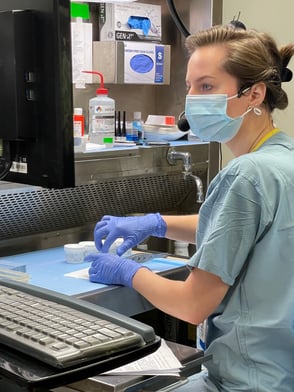
Founded in 2002, Voicebrook is a trusted leader in pathology workflow innovation, helping laboratories modernize reporting, improve efficiency, and adapt to the evolving demands of patient care.
Our solutions are designed specifically for pathology, combining deep industry expertise with advanced automation, structured data capture, and voice-enabled workflows that reduce friction across the reporting process.
As pathology continues to evolve through digital transformation and AI, Voicebrook remains committed to helping laboratories work smarter, scale sustainably, and stay focused on delivering high-quality care.

Pathology News Roundup: May 2026
CAP Membership Hits Record High. The College of American Pathologists (CAP) has reached a major milestone, surpassing 20,000 total members for the...
Pathology News Roundup: March 31, 2025
Match Day 2025. Match Day is the annual event in the United States when all medical residency applicants find out where (and in what specialty) they...